
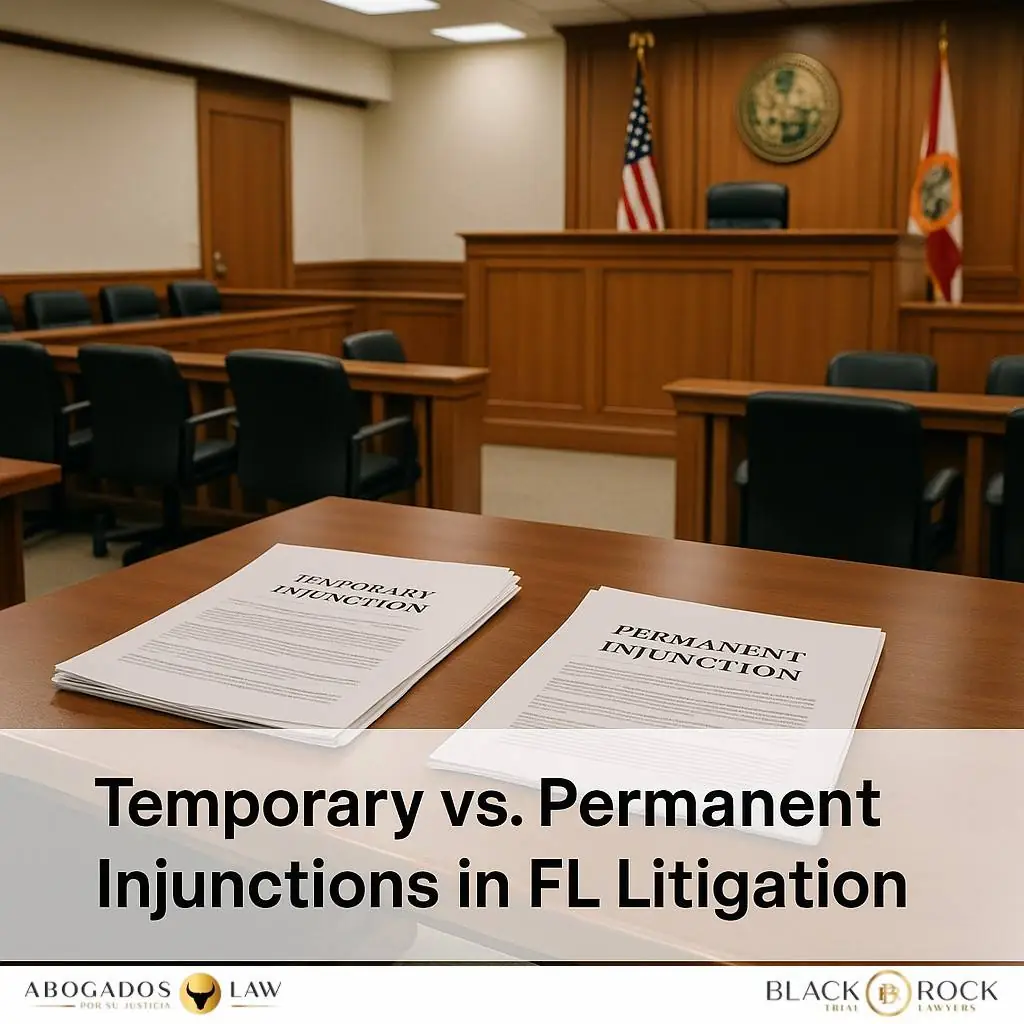
What’s the real risk in confusing a temporary injunction with a permanent one? In Florida civil litigation, the distinction can make or break your case. Temporary injunctions are emergency court orders—granted quickly to prevent immediate, irreparable harm. They’re not meant to last forever, but they can freeze assets, halt business actions, or force compliance until the court decides the dispute. To get one, you must show imminent harm, a likelihood of success, and that no other remedy will suffice. Florida Rule of Civil Procedure 1.610 sets strict notice and evidence requirements—miss a step, and your request can be denied.
Permanent injunctions, on the other hand, are issued after a full trial or hearing. These orders resolve the dispute and can shape business operations or personal rights for years. The legal standard is higher: You must prove entitlement under Florida law, and the court weighs all evidence before granting a permanent injunction. Florida Statutes § 26.012 gives circuit courts authority to issue these orders, but only after both sides have their day in court.
Mistakes are common. Parties often confuse the urgency and evidence needed for temporary relief with the finality of permanent orders. Failing to meet deadlines, skipping proper notice, or misunderstanding the burden of proof can cost you leverage—or even your case. Our firm sees these errors in real litigation, from business disputes to property fights. Knowing which injunction fits your situation, and following Florida’s procedural rules, is critical for protecting your rights and interests.
☎️ Schedule a Legal Consult
📲Call/Text 24/7: 813-254-1777
🌎litigation.blackrocklaw.com
Disclaimer: This content is for informational purposes only and does not constitute legal advice, and laws and legal interpretations may change after the date of publication.
Written by:
Gil Sánchez, Esq.
CEO | Civil Trial Attorney
Black Rock Trial Lawyers
Abogados Law