
Ever seen a business lose its rights overnight because it waited too long to ask the court for help? In Florida, injunctions are the legal weapon to stop harmful actions—sometimes in hours, not days. But the process is unforgiving: one missed step and your emergency relief vanishes.
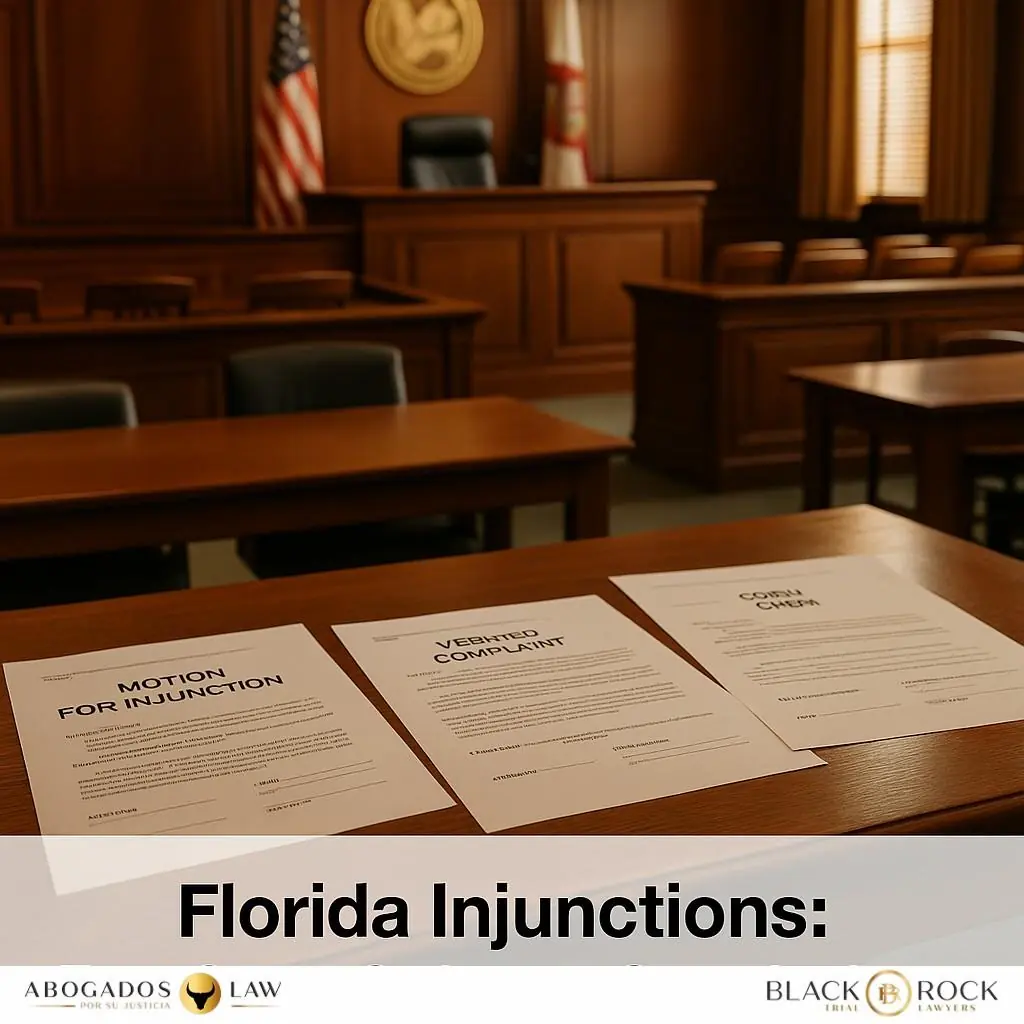
Florida Rule of Civil Procedure 1.610 governs injunctions. To get a judge to order someone to ‘stop’ fast, you must file a verified complaint and a motion for temporary injunction. Your motion must show irreparable harm, a clear legal right, and that money damages won’t fix the problem. The court weighs the urgency, the balance of harms, and whether you’re likely to win at trial. Judges can grant emergency injunctions ex parte (without notifying the other side), but only if you strictly follow notice and procedural rules. If you skip a step or miss a deadline, your case can be dismissed or delayed.
Real Florida litigation scenarios show the stakes: a business facing theft of trade secrets, a property owner threatened by illegal construction, or a contract dispute where delay means permanent loss. Our firm has seen clients lose critical rights because they waited too long or failed to present clear evidence. Timing is everything—Florida courts move fast, but only if you do. Injunctions are not automatic; you must convince the judge with facts, urgency, and legal authority. If you need to stop someone now, act immediately and consult with experienced counsel.
☎️ Schedule a Legal Consult
📲Call/Text 24/7: 813-254-1777
🌎litigation.blackrocklaw.com
Disclaimer: This content is for informational purposes only and does not constitute legal advice, and laws and legal interpretations may change after the date of publication.
Written by:
Gil Sánchez, Esq.
CEO | Civil Trial Attorney
Black Rock Trial Lawyers
Abogados Law