
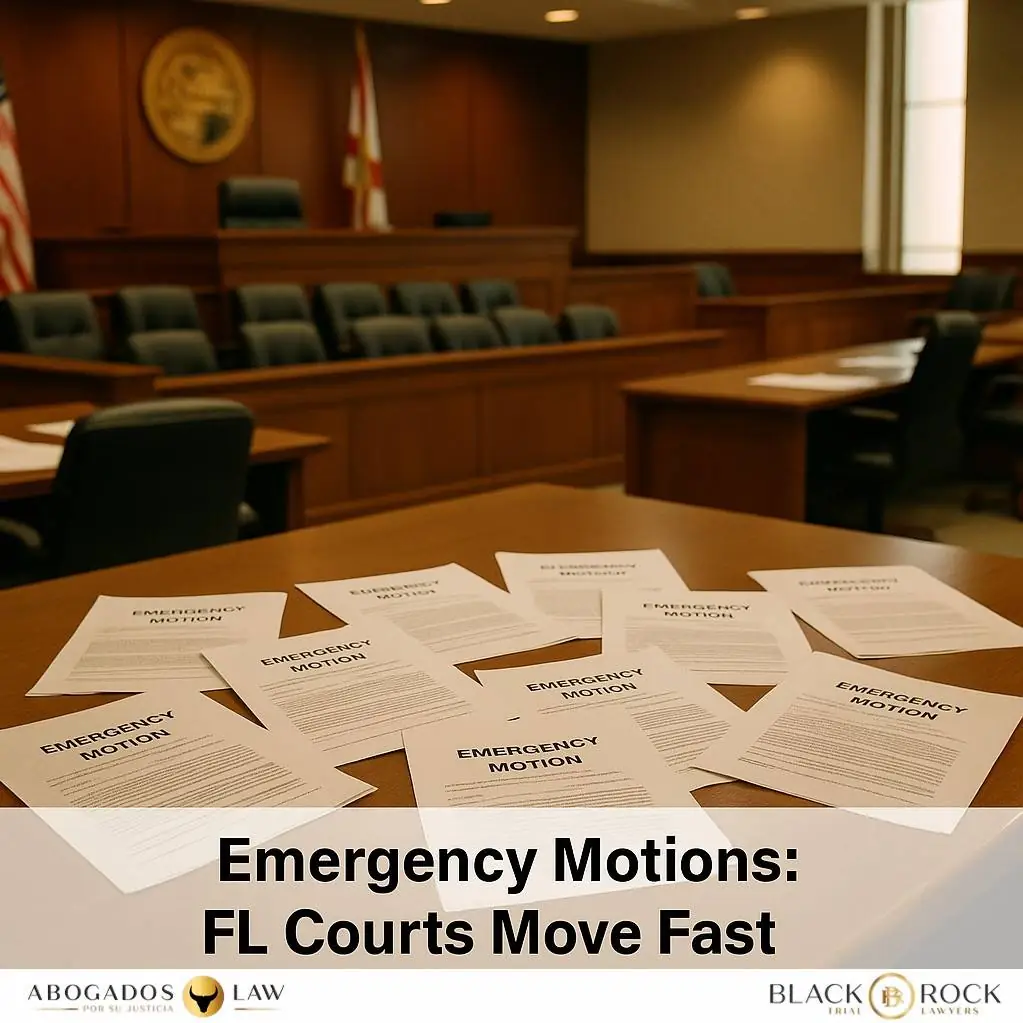
Think Florida courts always move at a snail’s pace? When a true emergency strikes—like imminent loss of property, business disruption, or irreparable harm—judges can schedule hearings in hours, not weeks. But the bar is high: only situations where delay would cause immediate, irreparable injury qualify for emergency relief.
Florida Rule of Civil Procedure 1.610 sets the standard. You must file a detailed motion, supported by affidavits and clear evidence, showing why immediate action is necessary and why no other remedy exists. Judges scrutinize every claim—vague allegations or missing documents will sink your motion. The court may require notice to the opposing party unless delay would defeat the purpose of relief. Rule of Judicial Administration 2.545 also emphasizes prompt resolution when urgency is proven.
Mistakes are common. Many litigants confuse inconvenience with emergency, or fail to meet procedural requirements. If your motion lacks specificity, or you miss a deadline, the court will not act quickly. Our firm helps clients avoid these pitfalls, ensuring that when true emergencies arise, your case is positioned for swift judicial action.
☎️ Schedule a Legal Consult
📲Call/Text 24/7: 813-254-1777
🌎litigation.blackrocklaw.com
Disclaimer: This content is for informational purposes only and does not constitute legal advice, and laws and legal interpretations may change after the date of publication.
Written by:
Gil Sánchez, Esq.
CEO | Civil Trial Attorney
Black Rock Trial Lawyers
Abogados Law