
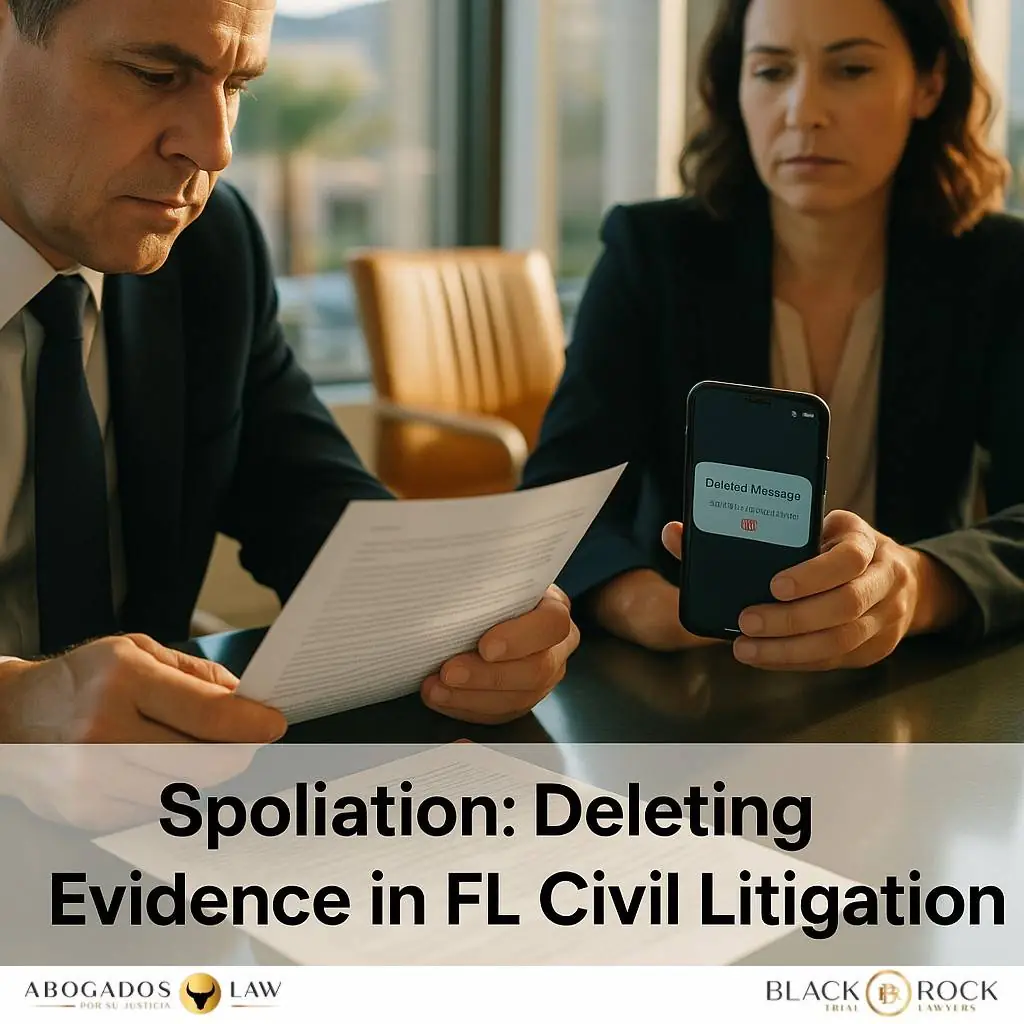
Ever thought deleting a text or shredding a document would make your legal headache vanish? In Florida civil litigation, that move can destroy your case. Spoliation—destroying, altering, or failing to preserve evidence—triggers some of the harshest penalties courts can impose. Once you know or should know that a lawsuit is possible, you have a legal duty to preserve all relevant evidence, whether it’s a paper contract, an email, or a text message.
Florida courts don’t take spoliation lightly. Under cases like *Martinez v. Allied Ins. Co. of Am.* and *Golden Yachts, Inc. v. Hall*, judges can sanction parties who delete or lose evidence after litigation is anticipated. Sanctions range from monetary penalties to the dreaded adverse inference instruction—where the jury is told to assume the missing evidence would have hurt your side. In extreme cases, your entire claim or defense can be struck. Florida Rule of Civil Procedure 1.380(e) makes clear: the duty to preserve evidence is real, and ignorance is no excuse.
If you’re in a dispute or see one coming, don’t delete, shred, or alter anything that could be relevant. Instead, consult with experienced Florida civil litigators who can help you navigate preservation obligations and avoid costly mistakes. The risks are immediate and severe—protect your rights from the start.
☎️ Schedule a Legal Consult
📲Call/Text 24/7: 813-254-1777
🌎litigation.blackrocklaw.com
Disclaimer: This content is for informational purposes only and does not constitute legal advice, and laws and legal interpretations may change after the date of publication.
Written by:
Gil Sánchez, Esq.
CEO | Civil Trial Attorney
Black Rock Trial Lawyers
Abogados Law