
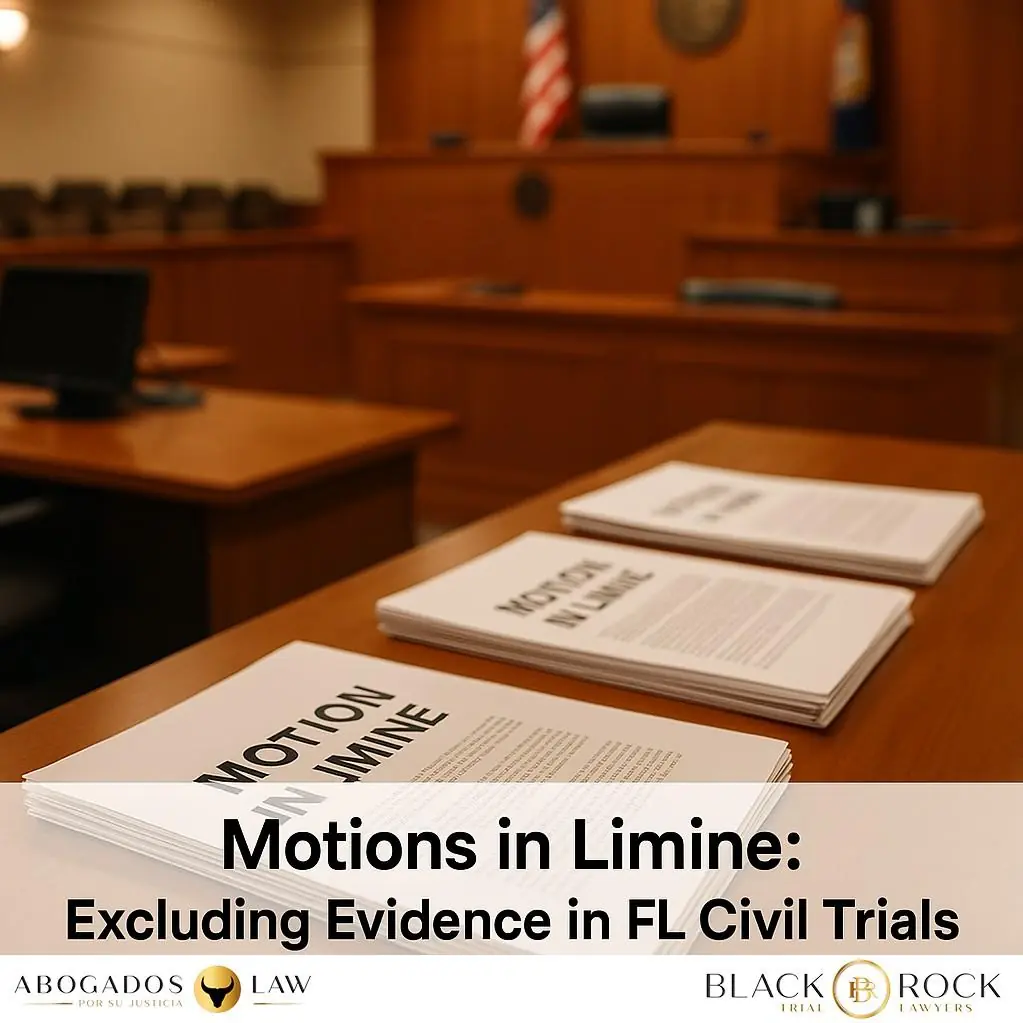
What happens when the jury hears evidence that shouldn’t be allowed? In Florida civil litigation, the answer often lies in a well-timed motion in limine. This pretrial motion is designed to keep prejudicial, irrelevant, or legally improper evidence out of the courtroom—before the jury ever takes their seats. Under Fla. R. Civ. P. 1.200(h), parties must file these motions before trial, targeting evidence that could unfairly sway the outcome. Judges typically rule on them just before opening statements, setting the boundaries for what the jury will see and hear.
Florida Statute § 90.104 empowers courts to exclude evidence that violates the rules of admissibility. The stakes are high: if you miss the deadline or fail to argue persuasively, damaging evidence could slip through and undermine your case. Common targets include hearsay, prior bad acts, and unreliable expert opinions. Our firm leverages motions in limine to protect clients from unfair surprises and ensure the trial stays focused on the facts that matter.
Mistakes happen when lawyers overlook deadlines, fail to specify the evidence they want excluded, or don’t back up their arguments with legal authority. The result? The jury may see evidence that should have been kept out. In Florida, timing and precision are everything. If you’re facing a civil dispute, understanding how motions in limine work—and acting fast—can make all the difference.
☎️ Schedule a Legal Consult
📲Call/Text 24/7: 813-254-1777
🌎litigation.blackrocklaw.com
Disclaimer: This content is for informational purposes only and does not constitute legal advice, and laws and legal interpretations may change after the date of publication.
Written by:
Gil Sánchez, Esq.
CEO | Civil Trial Attorney
Black Rock Trial Lawyers
Abogados Law