
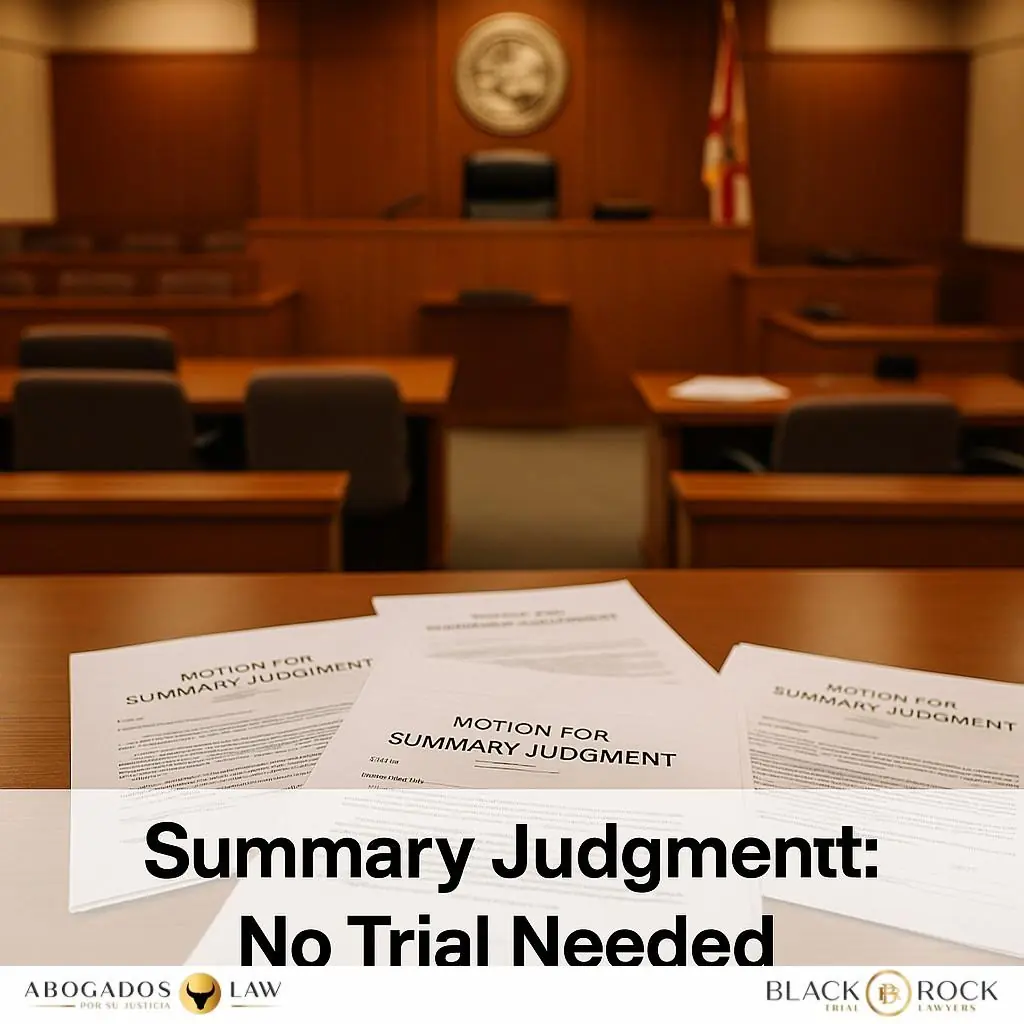
Can a single motion really end your Florida lawsuit before you ever step into a courtroom? The answer is yes—if the facts aren’t disputed, a Motion for Summary Judgment can resolve your case without a trial. This powerful tool is governed by Fla. R. Civ. P. 1.510, which allows either party to ask the judge to decide the case based on the evidence presented.
Timing is everything. The moving party must file the motion with supporting evidence—affidavits, depositions, and documents—showing there’s no genuine issue of material fact. The opposing party has just 20 days to respond, and failing to present counter-evidence can mean losing your right to a trial. Many litigants make the mistake of treating summary judgment as a mere formality, but judges scrutinize every detail. Our firm has seen cases turn on the strength of a single affidavit or a missing document.
If you’re facing a summary judgment motion, act fast. Review every piece of evidence, challenge any gaps, and ensure your response is timely and thorough. The stakes are high—get it wrong, and your case could be dismissed or decided against you. Black Rock Trial Lawyers helps clients navigate these motions, protect their rights, and maximize their chances in Florida civil litigation.
☎️ Schedule a Legal Consult
📲Call/Text 24/7: 813-254-1777
🌎litigation.blackrocklaw.com
Disclaimer: This content is for informational purposes only and does not constitute legal advice, and laws and legal interpretations may change after the date of publication.
Written by:
Gil Sánchez, Esq.
CEO | Civil Trial Attorney
Black Rock Trial Lawyers
Abogados Law