
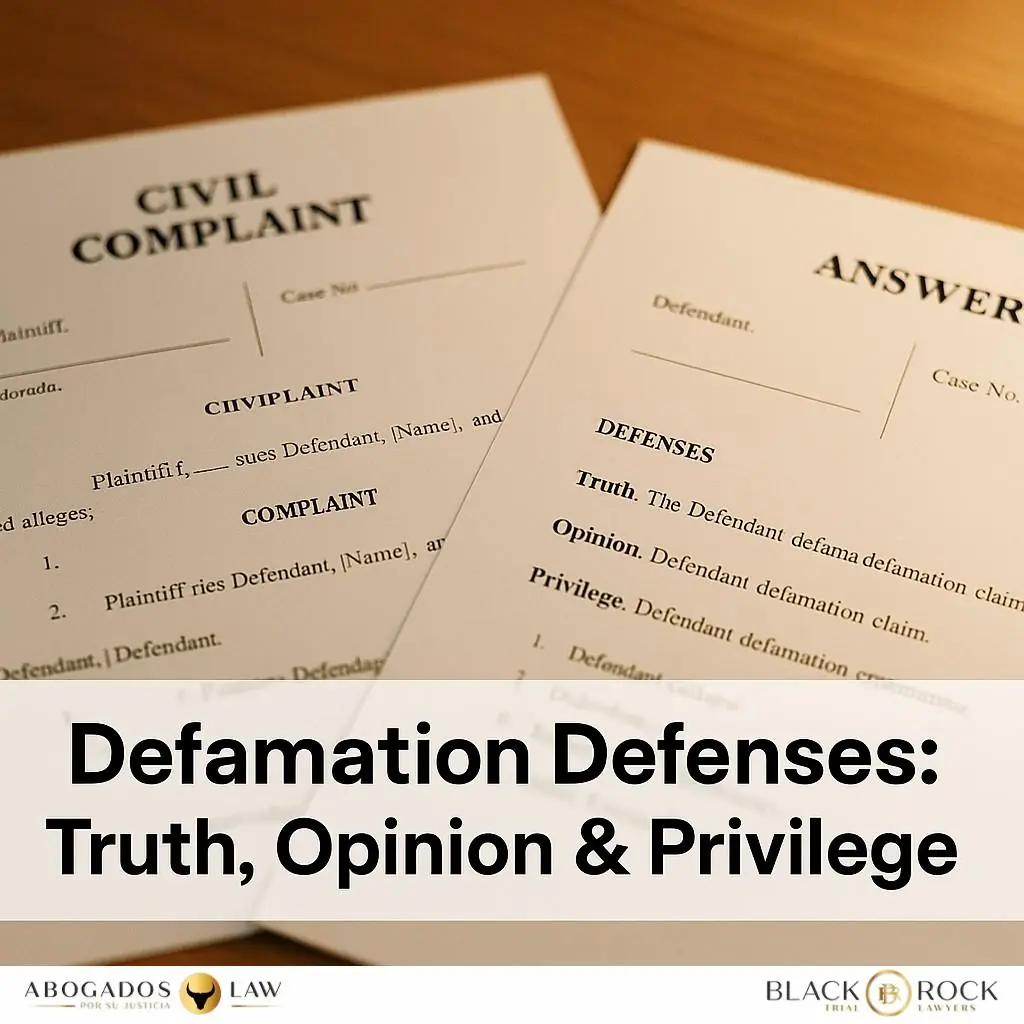
Think a defamation lawsuit is a slam dunk if someone’s reputation is on the line? Not so fast. In Florida, the law provides robust defenses that can turn the tables in court. Understanding these defenses—truth, opinion, and privilege—can make or break your case.
Truth: The Absolute Defense
Under Florida law, truth is an absolute defense to defamation. If the statement at issue is substantially true, no liability attaches—even if the truth is uncomfortable or damaging. The burden is on the defendant to prove the truth of the statement. Courts look at the “gist” or “sting” of the statement, not minor inaccuracies. See *Miami Herald Pub. Co. v. Ane*, 458 So. 2d 239 (Fla. 1984).
Opinion: Protected Speech or Actionable Statement?
Not every harsh word is defamation. Pure opinion—statements that cannot be proven true or false—are generally protected under the First Amendment and Florida law. However, if an opinion implies undisclosed defamatory facts, it may cross the line. The distinction is subtle and often litigated. See *Rasmussen v. Collier Cnty. Publ’g Co.*, 946 So. 2d 567 (Fla. 2d DCA 2006).
Privilege: When the Law Shields Your Words
Certain statements are privileged, meaning they cannot be the basis for a defamation claim—even if false or damaging. Absolute privilege applies to statements made in judicial proceedings, legislative debates, and some official communications. Qualified privilege may protect statements made in the public interest, but it can be lost if made with malice. See Fla. Std. Jury Instr. (Civ.) 405.10.
Common Pitfalls and Litigation Strategy
Defamation defenses are powerful but nuanced. Misunderstanding the difference between fact and opinion, or failing to assert privilege properly, can undermine your case. Strategic legal counsel is essential to navigate these defenses and protect your rights in Florida civil litigation.
☎️ Schedule a Legal Consult
📲Call/Text 24/7: 813-254-1777
🌎litigation.blackrocklaw.com
Disclaimer: This content is for informational purposes only and does not constitute legal advice, and laws and legal interpretations may change after the date of publication.
Written by:
Gil Sánchez, Esq.
CEO | Civil Trial Attorney
Black Rock Trial Lawyers
Abogados Law