
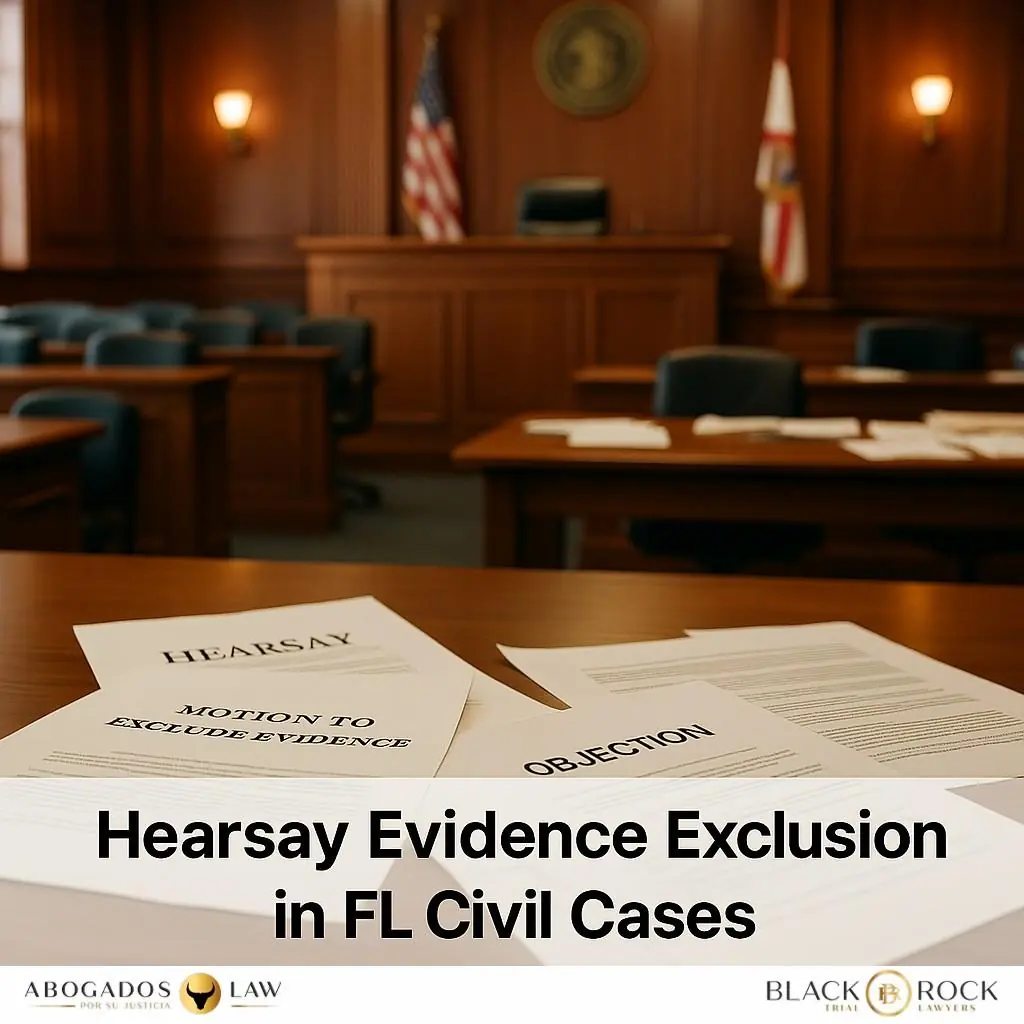
Ever wondered why a perfectly honest statement can be blocked from Florida civil court? The answer lies in the hearsay rule—a cornerstone of evidence law that keeps some ‘truth’ out of the courtroom. Hearsay is any out-of-court statement offered to prove the truth of what it says, and under Fla. Stat. § 90.802, it’s generally inadmissible unless it fits a specific exception.
Florida’s legal system is built on reliability and fairness. That means only evidence that can be cross-examined or falls under a recognized exception (like business records or admissions) gets in. Even a critical email, text, or witness statement can be excluded if it doesn’t meet the legal standard. The court isn’t interested in convenience—it wants evidence that’s trustworthy and subject to challenge. This is why the hearsay rule is so powerful: it prevents unreliable statements from influencing the outcome.
Litigants often stumble by missing hearsay objections or failing to lay the right foundation for exceptions. Deadlines for evidence disclosure and objections are strict under Fla. R. Civ. P. 1.510. If you miss them, your ‘truth’ may never be heard. Protect your case by understanding the rules, preparing your evidence, and consulting with experienced counsel. Our firm helps you navigate these pitfalls and maximize your chances in Florida civil litigation.
☎️ Schedule a Legal Consult
📲Call/Text 24/7: 813-254-1777
🌎litigation.blackrocklaw.com
Disclaimer: This content is for informational purposes only and does not constitute legal advice, and laws and legal interpretations may change after the date of publication.
Written by:
Gil Sánchez, Esq.
CEO | Civil Trial Attorney
Black Rock Trial Lawyers
Abogados Law