
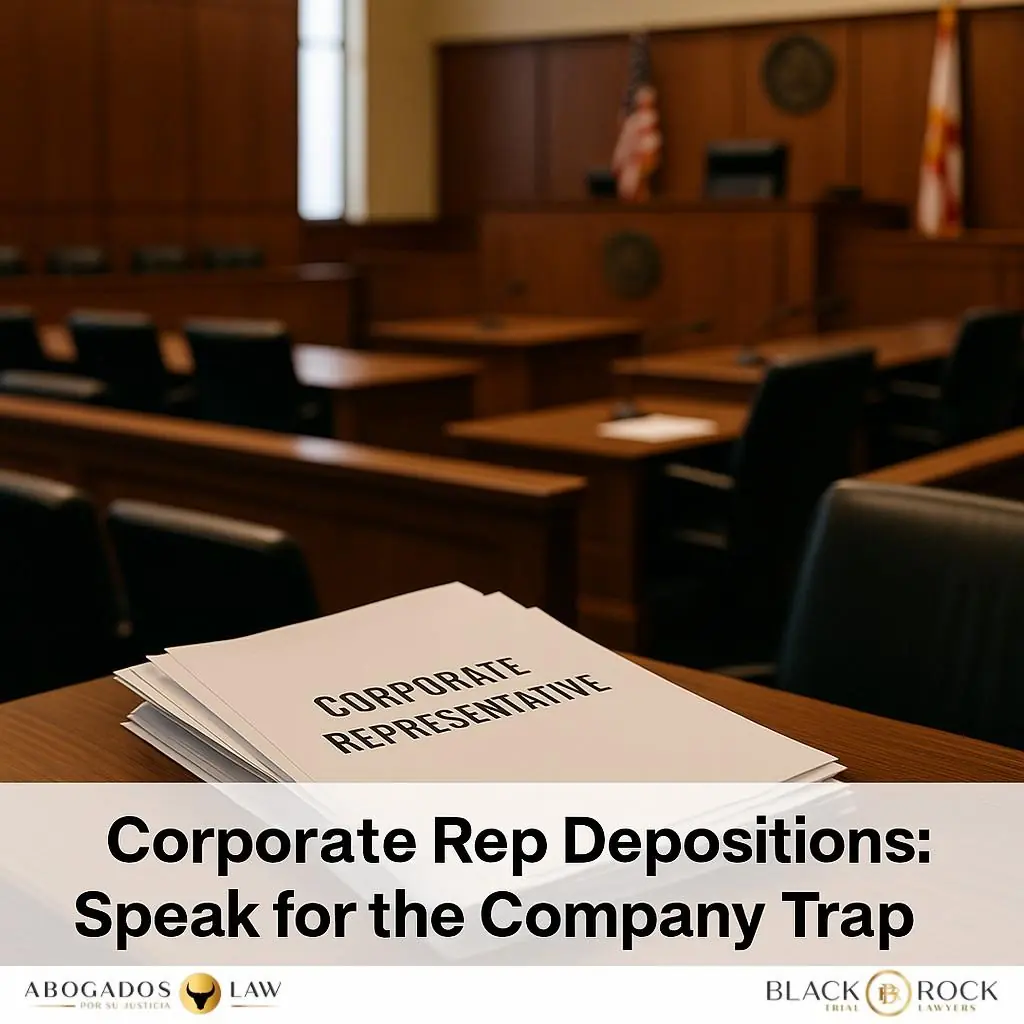
What happens when your corporate representative is called to testify in a Florida civil lawsuit? Under Rule 1.310(b)(6), the answers given aren’t just personal—they’re binding on your entire company. This rule empowers opposing counsel to demand testimony on specific topics, and your rep’s statements become the official position of your business. One misstep can expose your company to damaging admissions, sanctions, or even unfavorable rulings.
Florida courts expect your designated representative to be fully prepared on every listed subject. Too often, businesses select the wrong person or fail to prep thoroughly, leading to incomplete or inaccurate testimony. The scope of topics can be broad, and the rep must speak knowledgeably for the company—not just their own department or experience. If your rep is caught off guard, the consequences can be severe, including court sanctions or losing key issues in litigation.
Strategic preparation is essential. Review the notice topics, gather relevant documents, and ensure your rep understands the legal stakes. Treat every deposition as a high-risk event, not a routine task. By mastering Rule 1.310(b)(6) and avoiding common mistakes, you protect your company’s interests and strengthen your litigation position.
☎️ Schedule a Legal Consult
📲Call/Text 24/7: 813-254-1777
🌎litigation.blackrocklaw.com
Disclaimer: This content is for informational purposes only and does not constitute legal advice, and laws and legal interpretations may change after the date of publication.
Written by:
Gil Sánchez, Esq.
CEO | Civil Trial Attorney
Black Rock Trial Lawyers
Abogados Law