
Ever thought a failed real estate deal in Florida just means a refund? The truth is, Florida law gives you more options—if you know how to use them. The difference between specific performance and damages can make or break your case, and the clock is always ticking.
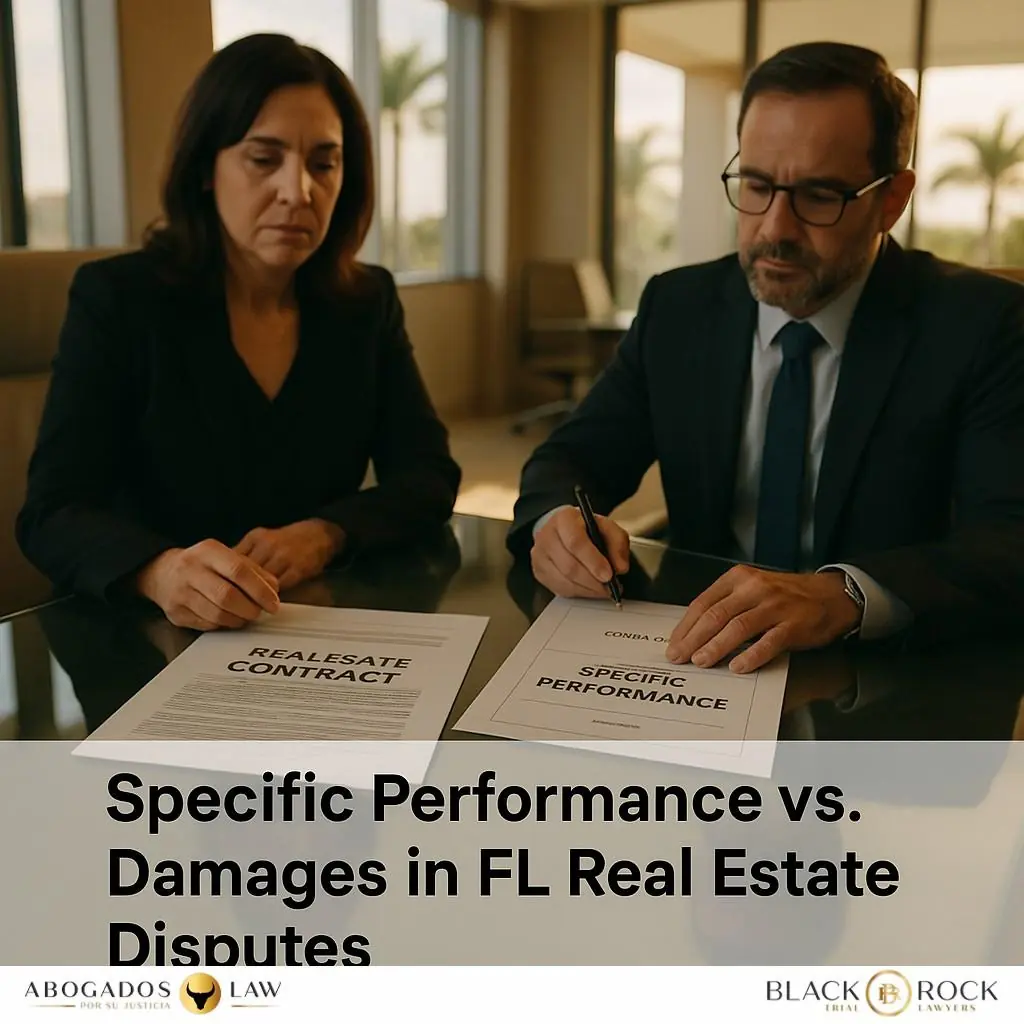
Specific performance is a powerful remedy in Florida real estate litigation. If a contract is clear, the property is unique, and the buyer is ready, willing, and able to perform, courts may order the sale to go through. Florida courts treat real estate as inherently unique, making specific performance a real possibility for both buyers and sellers. But beware: if the contract is ambiguous or the buyer can’t prove readiness, courts may deny this remedy. See *Castro v. Sangles*, 637 So. 2d 989 (Fla. 3d DCA 1994).
Damages are the fallback when specific performance isn’t available. If the property is no longer available or the contract is too vague, you may only recover monetary losses. Florida law requires you to plead damages with specificity under Fla. R. Civ. P. 1.110. Failing to do so—or missing the statute of limitations—can destroy your claim. Timing is everything: most real estate contract actions must be brought within five years under Fla. Stat. § 95.11(2)(b).
Litigation strategy is critical. Many parties lose leverage by misunderstanding what Florida law actually allows. Plead both remedies if possible, and act fast. The wrong move—or a missed deadline—can cost you the property or your recovery. Black Rock Trial Lawyers helps clients navigate these high-stakes disputes with precision and authority.
☎️ Schedule a Legal Consult
📲Call/Text 24/7: 813-254-1777
🌎litigation.blackrocklaw.com
Disclaimer: This content is for informational purposes only and does not constitute legal advice, and laws and legal interpretations may change after the date of publication.
Written by:
Gil Sánchez, Esq.
CEO | Civil Trial Attorney
Black Rock Trial Lawyers
Abogados Law