
Think your lawyer’s arguments will carry the day at summary judgment? Florida courts aren’t swayed by rhetoric—they demand admissible evidence. Under Fla. R. Civ. P. 1.510, summary judgment is granted only when there’s no genuine dispute of material fact, and that determination hinges on what you can actually prove, not what you claim.
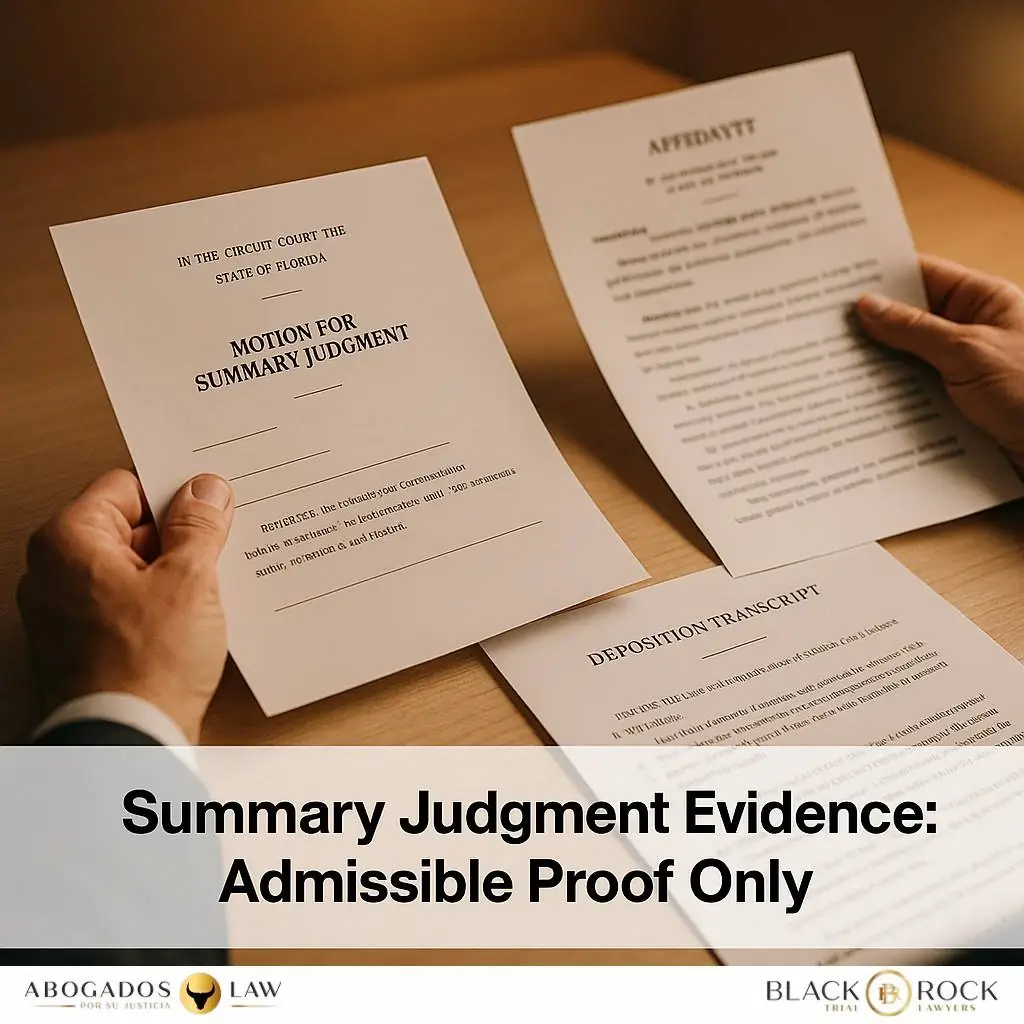
The Florida Supreme Court’s 2021 amendments to Rule 1.510 brought state practice in line with federal standards. Now, affidavits must be based on personal knowledge, set out facts that would be admissible at trial, and show the affiant is competent to testify. Deposition transcripts, contracts, and authenticated documents are fair game. But unsworn statements, hearsay, or mere attorney arguments? They’re out. Courts routinely reject summary judgment motions that rely on assertions instead of evidence, leaving parties exposed to costly delays or outright defeat.
To avoid these pitfalls, you must build your record with care. Gather affidavits that meet the rule’s requirements, ensure documents are properly authenticated, and use deposition testimony strategically. Missing a technical requirement or relying on argument alone can sink your case before trial. Our firm helps clients navigate these rules, ensuring their evidence stands up when it matters most.
☎️ Schedule a Legal Consult
📲Call/Text 24/7: 813-254-1777
🌎litigation.blackrocklaw.com
Disclaimer: This content is for informational purposes only and does not constitute legal advice, and laws and legal interpretations may change after the date of publication.
Written by:
Gil Sánchez, Esq.
CEO | Civil Trial Attorney
Black Rock Trial Lawyers
Abogados Law