
Ever handed over documents thinking they’re protected, only to find out they’re not? In Florida civil litigation, attorney-client privilege and work product protection are often confused, but the stakes are high if you get it wrong.
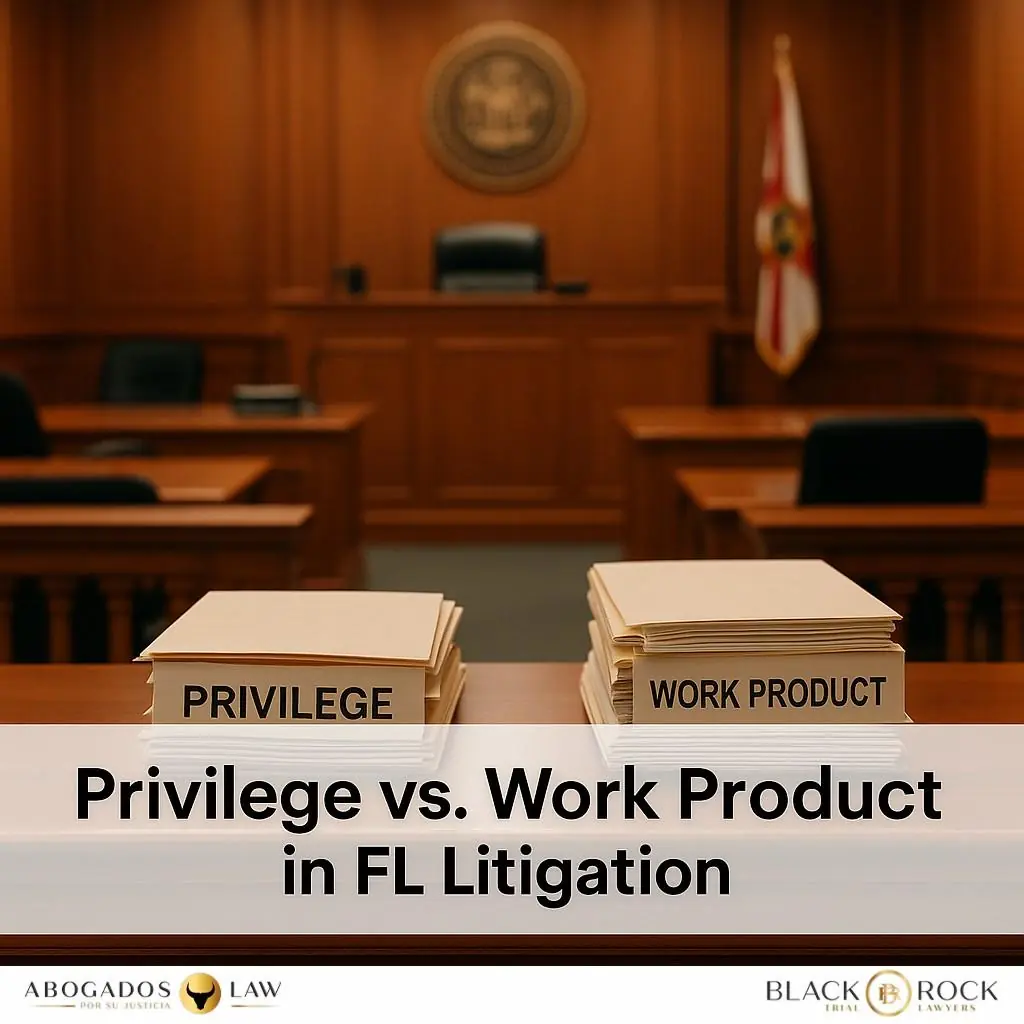
Attorney-client privilege is governed by Fla. Stat. § 90.502. It protects confidential communications between you and your attorney made for the purpose of legal advice. This shield is absolute—if the communication fits the statute, it cannot be forced into the open. But privilege only covers direct legal advice, not every document or email sent to your lawyer.
Work product protection is defined by Fla. R. Civ. P. 1.280(b)(3). It covers materials prepared in anticipation of litigation, such as attorney notes, strategies, and research. Unlike privilege, work product can be overcome if the opposing party shows substantial need and cannot obtain the information elsewhere. Courts weigh this carefully, and deadlines for asserting work product protection are tied to discovery responses and objections.
Mistaking privilege for work product—or vice versa—can lead to forced disclosure, lost leverage, and exposure of your litigation strategy. Florida courts routinely see parties lose protection because they failed to assert the correct doctrine or missed procedural deadlines. When responding to discovery or prepping for trial, knowing which shield applies is critical. Our firm helps you navigate these distinctions to protect your interests.
☎️ Schedule a Legal Consult
📲Call/Text 24/7: 813-254-1777
🌎litigation.blackrocklaw.com
Disclaimer: This content is for informational purposes only and does not constitute legal advice, and laws and legal interpretations may change after the date of publication.
Written by:
Gil Sánchez, Esq.
CEO | Civil Trial Attorney
Black Rock Trial Lawyers
Abogados Law