
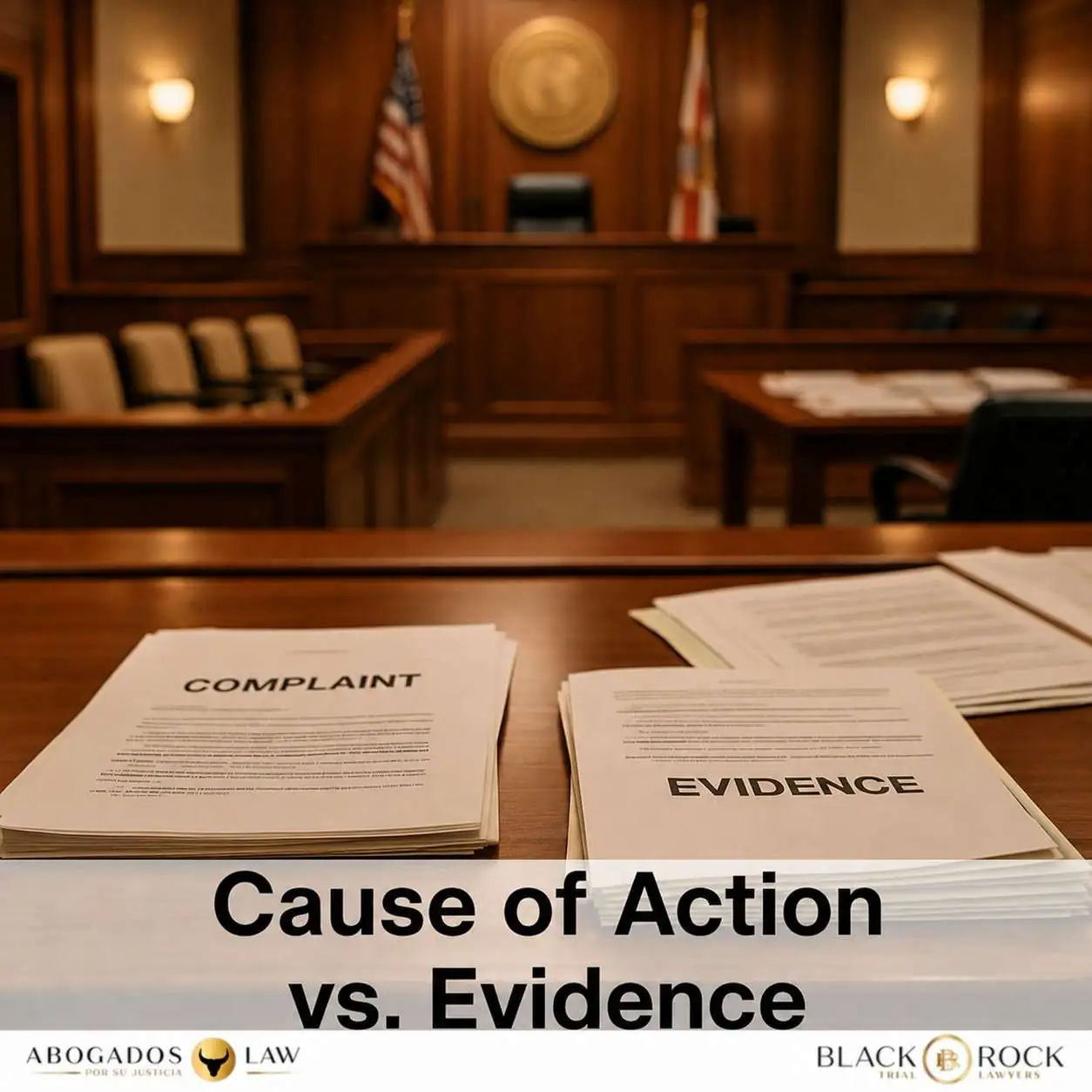
Confusing your cause of action with your evidence is one of the most common—and costly—mistakes in Florida civil litigation. A cause of action is your legal right to sue, such as breach of contract or negligence. Evidence is what you use to prove the elements of that cause of action in court. Many litigants believe that simply having documents, emails, or witness statements is enough to win. But without a valid cause of action, your evidence is irrelevant.
Florida Rule of Civil Procedure 1.110 requires you to plead a cause of action with specific facts. The court will dismiss your case if you fail to state a legal claim, regardless of how much evidence you attach. The Florida Standard Jury Instructions make it clear: jurors decide whether the evidence proves the elements of the cause of action—not whether the evidence itself creates a claim. This distinction is critical. If you file a lawsuit based only on evidence, without a proper legal foundation, you risk dismissal, wasted costs, and lost credibility.
Courts across Florida are cracking down on poorly pleaded lawsuits. To avoid these pitfalls, start by identifying the correct cause of action under Florida law. Then gather evidence that directly supports each element. Deadlines matter—plead your claim properly from the outset, and be ready to respond to motions to dismiss or for summary judgment. Our firm helps you build your case from the ground up, ensuring your legal claim and evidence work together for maximum impact.
☎️ Schedule a Legal Consult
📲Call/Text 24/7: 813-254-1777
🌎litigation.blackrocklaw.com
Disclaimer: This content is for informational purposes only and does not constitute legal advice, and laws and legal interpretations may change after the date of publication.
Written by:
Gil Sánchez, Esq.
CEO | Civil Trial Attorney
Black Rock Trial Lawyers
Abogados Law