
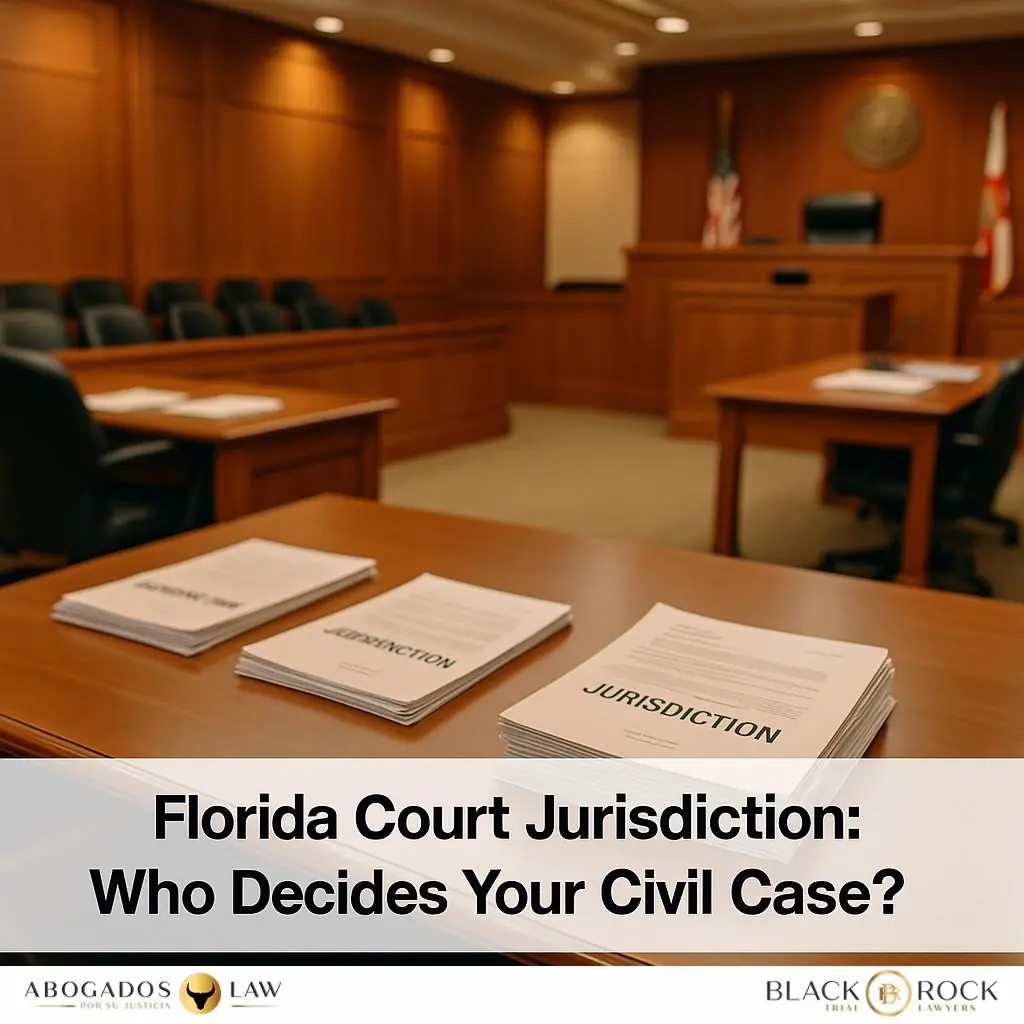
Ever seen a lawsuit thrown out because the court simply wasn’t allowed to hear it? Jurisdiction is the invisible gatekeeper in every Florida civil dispute. If you file in the wrong court, your case can be dismissed before it even gets started.
Florida courts require two types of jurisdiction: subject matter and personal. Subject matter jurisdiction means the court has the legal authority to decide your type of case—like contract disputes, business torts, or property claims. Circuit courts handle larger disputes (over $30,000), while county courts cover smaller claims. Fla. Stat. § 26.012 and § 34.01 spell out these boundaries. Personal jurisdiction is the court’s power over the parties. If the defendant doesn’t live in Florida or hasn’t done business here, you may need to prove why the court can reach them. Rules like Fla. R. Civ. P. 1.030 and 1.140 govern how and when these challenges are raised.
Missing a jurisdictional deadline or filing in the wrong venue can cost you time, money, and your entire claim. Our firm sees these mistakes most often with out-of-state parties, contract disputes, and business litigation. Jurisdiction isn’t just a technicality—it’s the foundation of your case. Know the rules, act quickly, and protect your rights from the start.
☎️ Schedule a Legal Consult
📲Call/Text 24/7: 813-254-1777
🌎litigation.blackrocklaw.com
Disclaimer: This content is for informational purposes only and does not constitute legal advice, and laws and legal interpretations may change after the date of publication.
Written by:
Gil Sánchez, Esq.
CEO | Civil Trial Attorney
Black Rock Trial Lawyers
Abogados Law