

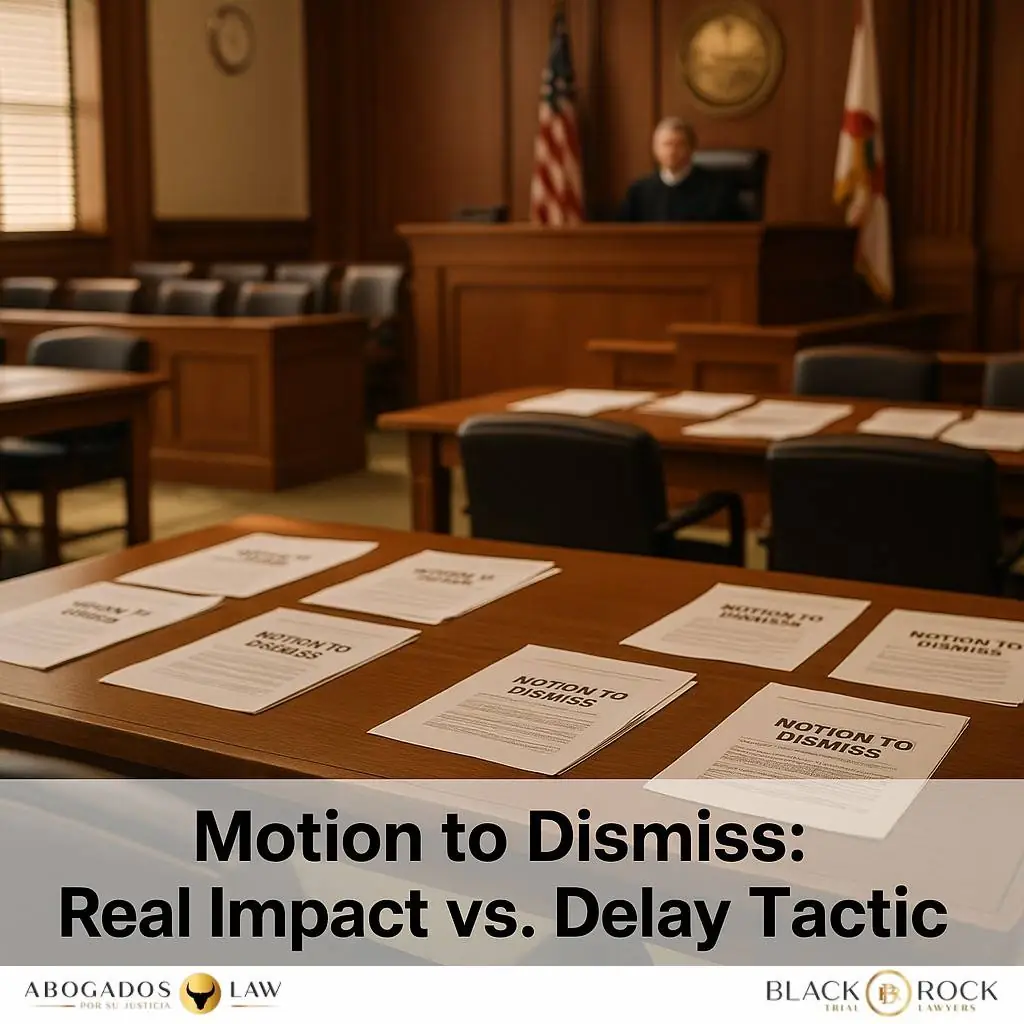
Ever wondered if a Motion to Dismiss will actually end your lawsuit—or just drag it out? In Florida civil litigation, this motion is often misunderstood. While it can be a legitimate tool to challenge a defective complaint, it’s also notorious for being used as a delay tactic by defendants hoping to stall discovery and pressure plaintiffs into settlement.
Florida Rule of Civil Procedure 1.140(b) sets the legal grounds for dismissal: lack of jurisdiction, improper venue, insufficient process, or failure to state a cause of action. Courts scrutinize these motions closely. If the complaint meets the requirements of Fla. R. Civ. P. 1.110, judges rarely grant dismissal unless the legal defects are clear. Many motions are denied, but the process can add months to litigation and increase costs for both sides.
The real risk? Responding poorly or missing deadlines. Plaintiffs must file timely responses, often within 20 days, or risk losing their case. Defendants who file frivolous motions may face sanctions or lose credibility with the court. Knowing when a Motion to Dismiss is a genuine challenge—and when it’s just a stall—can make or break your litigation strategy. Our firm helps you cut through delay tactics and protect your rights in Florida courts.
☎️ Schedule a Legal Consult
📲Call/Text 24/7: 813-254-1777
🌎litigation.blackrocklaw.com
Disclaimer: This content is for informational purposes only and does not constitute legal advice, and laws and legal interpretations may change after the date of publication.
Written by:
Gil Sánchez, Esq.
CEO | Civil Trial Attorney
Black Rock Trial Lawyers
Abogados Law